image by Seed Terra
For Mystery Writers
25 Ways to Commit Murder Accurately Volume 1: Plants

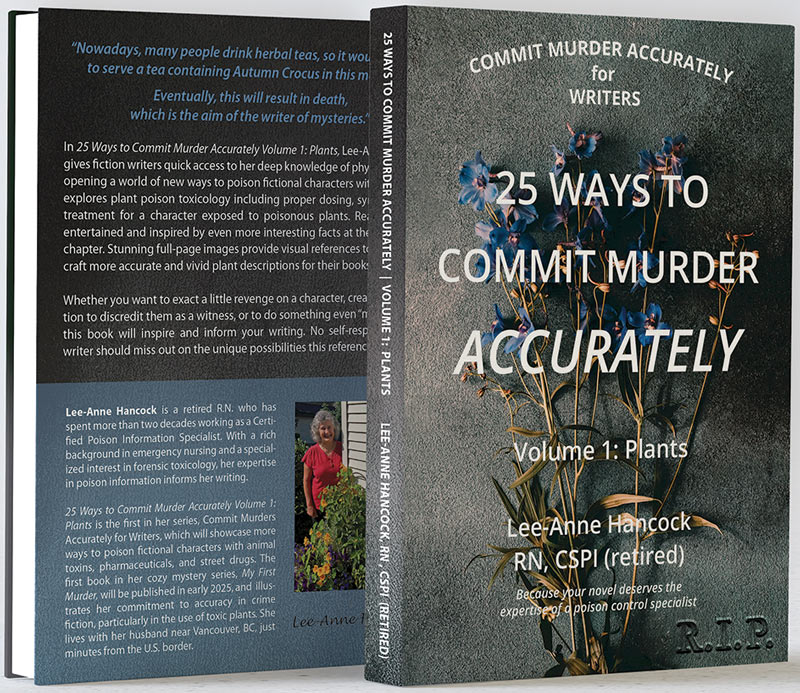
25 Ways to Commit Murder Accurately Volume 1: Plants is the first in a series of four books. In this volume I use my expertise as a retired Poison Information Specialist to offer basic, accurate information to mystery writers on poisonous plants and how they could be used in a storyline.
One of my key motivations for writing this book is the prevalence of murder mysteries with inaccurately portrayed poisons. The unrealistic timing and severity of the toxins, sudden onset of symptoms, and outdated information based on old wives’ tales are all aspects that need to be addressed. I have included plants that could kill a character, and plants that could be used to discredit or incapacitate a witness.
My primary goal is to begin with this book on toxic plants and then progress to writing a series of books about poisonous animals, street drugs, and pharmaceuticals. The ultimate aim is to equip fiction writers with the knowledge they need to portray murder accurately in their writing.
Order now!


USA Today bestselling author Shelley Adina wrote,
“I bought Lee-Anne’s book as a writer’s resource, and was delighted to find the perfect plant poison to use in The Engineer’s Nemesis. I appreciate the way she includes symptoms and does it from the standpoint of what a writer needs to know.” — Shelley Adina, PhD
From the Back Cover
In 25 Ways to Commit Murder Accurately Volume 1: Plants, Lee-Anne Hancock gives fiction writers quick access to her knowledge of phytotoxicology, opening a world of new ways to poison fictional characters with plants. She explores plant poison toxicology, including proper dosing, symptoms, and treatments for a character exposed to poisonous plants. Readers will be entertained and inspired by even more interesting facts at the end of each chapter. Stunning full page images provide visual references to help writers craft more accurate and vivid descriptions for their books.
Whether you want to exact a little revenge on a character, create disorientation to discredit them as a witness, or do something even ‘more devious’, this book will inspire and inform your writing. No self-respecting crime writer should miss out on the unique possibilities this reference book offers .
From Amazon
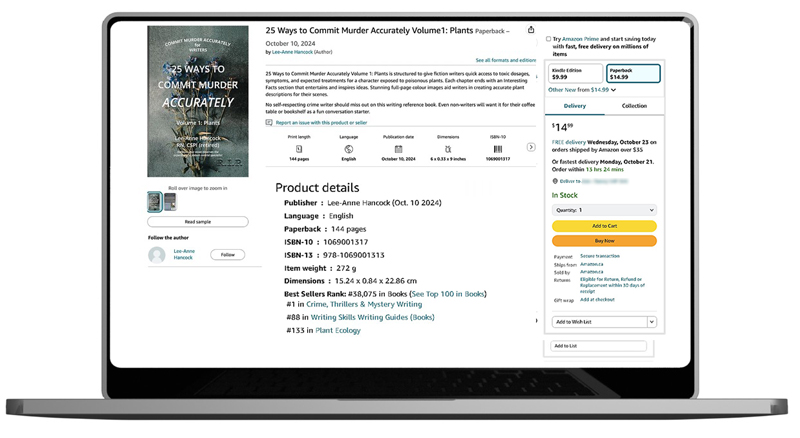
’25 Ways to Commit Murder Accurately Volume 1: Plants is structured to give fiction writers quick access to toxic dosages, symptoms, and expected treatments for a character exposed to poisonous plants. Each chapter ends with an Interesting Facts section that entertains and inspires ideas. Stunning full-page colour images aid writers in creating accurate plant descriptions for their scenes.
No self-respecting crime writer should miss out on this writing reference book. Even non-writers will want it for their coffee table or bookshelf as a fun conversation starter.’
You can read a few sample pages on Amazon.

A review on Medium
Are You Using Plants in Your Murder Mystery — Accurately?
Don’t drive your herbalist readers nuts by having the wrong information about the plants used to commit the murder.
My daughter is not an herbalist, but she reads avidly and catches every flaw. I often hear, “Mom, look, she says she put monkshood in the brownies, but in Agatha Christy she said …”
What was cozy mystery writer Lee-Anne Hancock to do after working as a Certified Poison Information Specialist for over two decades?
Write the missing reference book!
I got my copy and what I like is that it’s not full of fluff. It’s well organized. Just what you want in a reference book.
Plant Toxicology
Toxic Dose
Pharmacokinetics
Effects
Treatment
Interesting Facts
This is the first of a set of four. I’m so excited.
Here is a tiny taste
Killing Your Darlings Off in a Nice, or Not so Nice, Way.
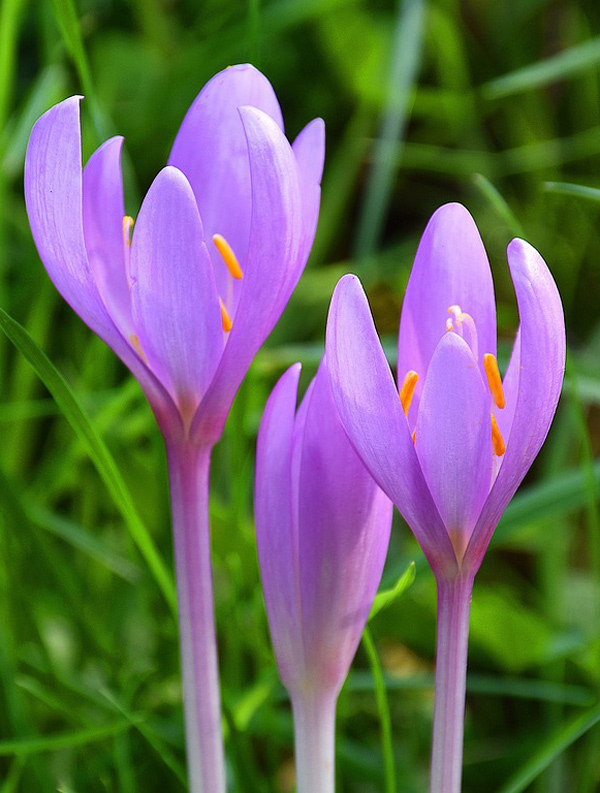
Autumn crocus – Colchicum autumnale
Photo by Anenome123 on Pixabay
I thought I would start with a very toxic plant that could easily cause fatalities. It happens to be a beautiful plant that flowers in the autumn. Hence the name Autumn Crocus. Do not confuse it with the spring crocus, which doesn’t cause concerns.
This plant contains a plant alkaloid called Colchicine. One can find it in a lot of backyard gardens.
Nowadays, many people drink herbal teas. It would be easy enough to serve tea in this manner.
This fall crocus has a multi-system poison that initially causes Gastro-Intestinal toxicity and slight confusion due to dehydration. This progresses to drowsiness, heart and lung failure, liver and kidney failure, and the body’s inability to produce the right amount of red and white blood cells and platelets in the blood.
Eventually, this results in death. This is the aim of the writer of mysteries.